werbuddy.com

Author name: srivastavarishabh73938097@gmail.com

Digital marketing

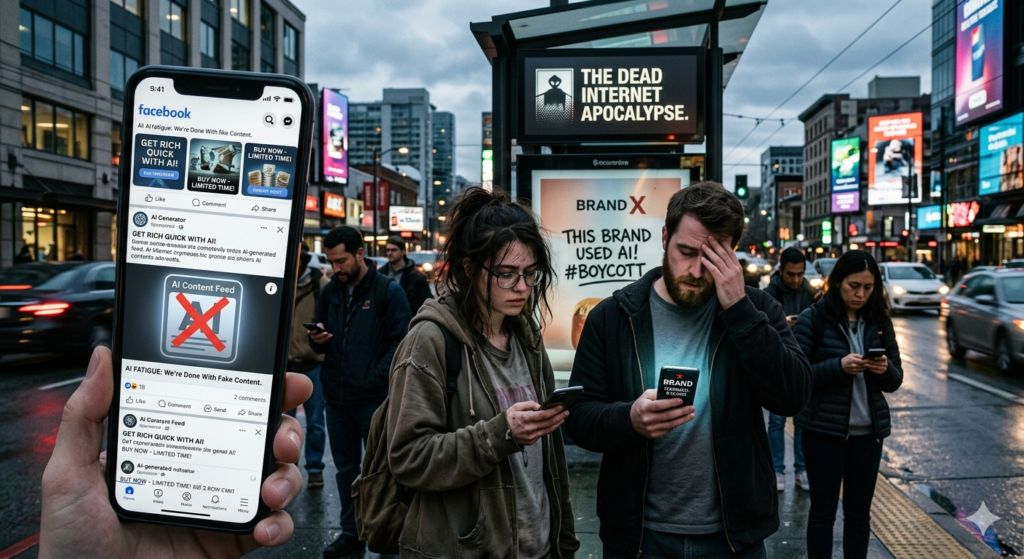
The Dead Internet Apocalypse: Why “AI Fatigue” Is Turning Audiences Against Your Brand.

Walk down the halls of LinkedIn. Skim through your industry newsletters.. Open a few top-ranking marketing blogs. Do you notice anything? Everything sounds the same. “In todays paced digital world it is crucial to work together think differently and improve how you operate.” It is polished, grammatically correct, perfectly optimized. And entirely boring. We have entered the era of the “Dead Internet Theory”. What once was a niche conspiracy theory. The idea that the internet’s mostly bots talking to bots. Is now our mainstream reality. AI has made creating content so easy, quick and effortless that the web is drowning in a sea of stuff”. A big cultural backlash is coming. People are pushing back against machines. They are getting tired of AI. Brands that rely on automation are losing trust. Brands that win the decade will be the ones that make a big change back, to being human. Here is a straightforward breakdown of why the automated content rush’s failing. And how to build a content plan that AI cannot replicate. The Problem: The Industrialized “Sea of Sameness”  When these new AI tools became popular company managers over the world looked at their plans for creating content and thought they found a way to save a lot of money. If a person takes four hours to write a blog post but a computer program can do it in four seconds the choice seems easy. The people in charge of making content started to care about making a lot of things than about making things that are good. This change had an effect that nobody planned for. Now we have a lot of the things everywhere. This is because the computer programs that make language are designed to guess the word that is most likely to come next based on what they have learned from the past. So what they write is an average of what is already on the internet. [Generic Marketer Prompt] ➔ [AI Language Model Engine] ➔ “The Uncanny Valley of Text” (Flawless Grammar, Zero Originality) When many companies use the computer programs and give them the same basic instructions they all get the same boring answers. The things that are written do not have a personality. They do not have feelings, about anything. They lose the things that make a company unique and interesting. They sound like a company that is just saying things to sound right but they are not really saying anything new or useful to the people who are reading them. The Large Language Models are the problem because they always produce the things. Companies use the Large Language Models. Get the same results. The Large Language Models make everything sound the same. The Twist: The Emergence of “AI Fatigue”  Marketers often think their audience is easy to fool.. In 2026 people are smarter than that. They have spent years chatting with computers. Now they can easily tell when an article was written by a robot. This has led to a problem: people are getting tired of reading stuff that sounds fake. * People are feeling overwhelmed, by all the content they see online. It’s like they’re drowning in a sea of text. * The numbers are clear: when people know a brands content was written by a computer they are 20% to 35% less likely to engage with it. * A lot of people 62% to be exact say they don’t trust brands that use content. People are getting frustrated with “slop”. That’s what they call low-quality content thats just thrown together. They can tell when a brand didn’t put in the effort to write something When readers figure out that a brand didn’t care enough to write something themselves they think: “If you didn’t care enough to write it why should I care enough to read it?” Passing off computer-written content as real thought leadership is an idea. It’s not just lazy. It can actually hurt your brand. The Solution: Building a “Human-First” Content Moat  If regular work done by machines has become super common then real human skills have become extremely valuable. The only way to stand out from all the automated stuff is to create something that machines can’t copy. To make your brand different from all the others you need to make a change that puts humans first. Here is a four-part plan to add a human touch back, into your marketing: 1. Double Down on Proprietary Case Studies  A large language model can tell you about a plan. It does not know what it is like to actually run a business. You should change the kind of things you write about. Instead of making lists that tell people how to do things you should write detailed stories about what really happened. Share all the information you have. Tell people the names of the programs you used show them how much it really cost to get each new customer and show them what the control panels really looked like even if they are not perfect. The way to beat the AI is this: since a computer program cannot make up experience of running a business when you write about what really happened it helps people trust you. Original stories, about what you did serve as a sign that you’re a real person and that is something that people can trust. 2. Tell Messy, Behind-the-Scenes Stories  Perfect corporate marketing is dull. Audiences want the dirty reality of human construction. Write about the product launch that failed miserably.Tell me the one onboarding mistake that nearly cost you your biggest client, and the exact human conversation that saved the relationship.Pull aside the curtain on your internal experiments. Vulnerability and open storytelling create an emotional bond that cannot be synthesized by algorithms.  3. Embrace Video with the “Stutter Premium”  In todays world most videos are too perfect and look fake. Raw video stands out because it is real and authentic. Editing your videos much can make them look unnatural. Try leaving
Digital marketing

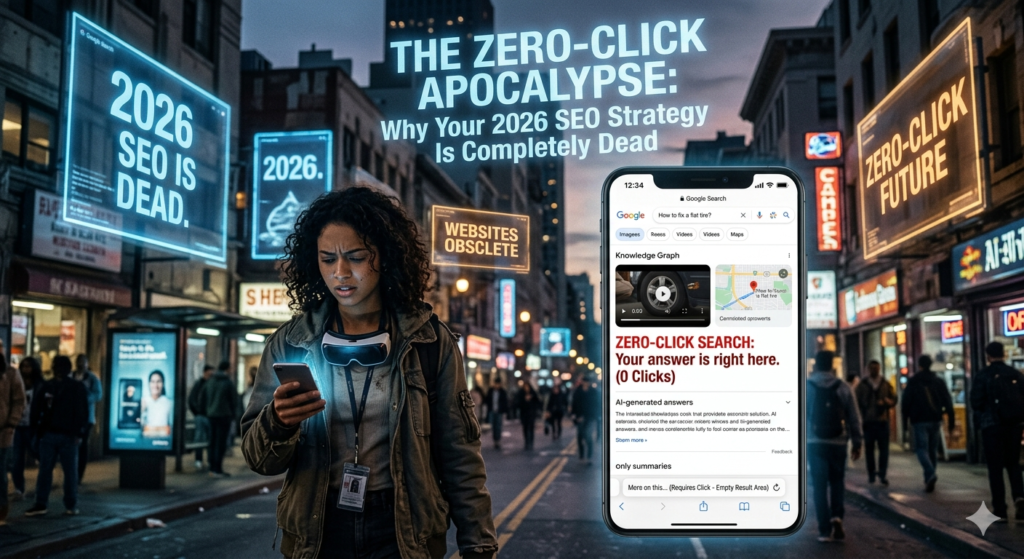
The Zero-Click Apocalypse: Why Your 2026 SEO Strategy Is Completely Dead.

The Zero-Click Apocalypse: Why Your 2026 SEO Strategy Is Completely Dead  For over twenty years the internet had a deal: you spent a lot of time making good content and search engines would help people find it. They would list your pages. Send people to your website. If your page was number one you got the visitors. That deal is gone now. We are now in a time where search engines do not send people to websites like they used to. Instead they give people the answers they need right on the search page. If you are still using ways to measure how well your website is doing you are not seeing the whole picture. The old way of getting people to visit your website is not working like it used to. To stay visible you need to change how you make content. The Problem: The Rise of Zero-Click Searches  The way people search for things on the internet is changing fast. Most searches on Google do not lead to people visiting websites. On computers this happens sixty percent of the time and on mobile devices it happens about seventy-seven percent of the time. This is because search engines are using intelligence to give people quick answers. When someone searches for information the search engine gives them a summary and they do not need to visit another website. [Traditional Search Query] ➔ 10 Blue Links ➔ User Clicks Website ➔ Traffic Earned [2026 AI Search Query] ➔ AI Overview ➔ Answer Displayed ➔ Zero Clicks Generated  For example if someone searches for “What’s the standard employee retention rate in the tech sector?” they do not need to click on a website to get the answer. The search engine gives them the answer away and they are happy.. The person who made the content that the search engine used does not get any benefit. This is a problem for websites that rely on people visiting them to get information. The old way of making content is not working like it used to. You need to make content that’s useful to the search engine so it can give people the answers they need. The Shift: Welcome to GEO (Generative Engine Optimization)  You are not writing for people anymore  you are writing for the search engine. You need to make content that the search engine can understand and trust. You need to be an expert in your field. The search engine sees you as a reliable source. If you can do this the search engine will use your content to give people answers. It will send people to your website. These people will be very interested, in what you have to offer because they have already read a summary of what you have. They will be more likely to buy something from you or use your services. You just need to make sure your content is good enough for the search engine to use. The traffic that comes from the search engine may be less. It will be more targeted. You need to make your content so good that the search engine wants to use it. This way you can still get people to visit your website even if the search engine is giving them answers away. The Solution: A  Actionable Playbook to Get Cited by AI  To be part of an AI Overview, you have to be very deliberate about formatting and authority programmatically. If you want to get your website on the trusted source list of these AI systems, deploy this 3-step GEO playbook immediately:  1. Hard-Code Your Context with Advanced Schema Markup – AI models don’t read your website like a human does. They parse code to find data entities and structural relationships fast. Without deep structured data on your site, you are invisible to an LLM.Use JSON-LD at the content level: Don’t settle for simple sitewide tags. Use specific schema modules to tag your exact content assets. If you publish a guide, use Article schema . If you answer customer questions, implement FAQPage schema. Deploy Author Schema AI search engines are risk averse, they prefer to summarize content backed with real human credentials. Use rich Person and Author schema to explicitly link your content to authenticated social profiles (e.g. LinkedIn), career bios, and awards from organizations.  2. Treat the First 100 Words as an “Answer Block”  LLMs care about being super efficient. If an AI engine has to read 800 words of info and personal stories just to find a simple definition it will just go to another website. * The “Answer First Explain Rule: Open every conceptual section or blog post with a short and clear definition. This definition should be around 40 to 60 words and state the conclusion away. It should not have phrases or business language that says “it depends.” * After the definition add content like: 1. Comparison tables 2. Step-by-step numbered lists 3. Concise bullet points This format helps AI bots easily extract and cite your data. Ai engines, like this structured way of presenting information. It makes it simple for them to find what they need. 3. Build Undeniable Brand Authority Off-Page                                                    Artificial intelligence engines figure out how trustworthy your brand is by looking at what the rest of the internet says about you. You cannot become an authority on a topic just by talking about it on your own website. You need to own the online space outside of your website. This means you should be active in online places where artificial intelligence models are always looking at what people are saying about you right now. These places include subreddits that’re just for your industry, question and answer threads on Quora and special groups on LinkedIn where leaders in your field share their thoughts. You should also share your special information that nobody else has. The best way to get an intelligence model to mention your business is to share new and original information that nobody else can copy. You

Digital marketing

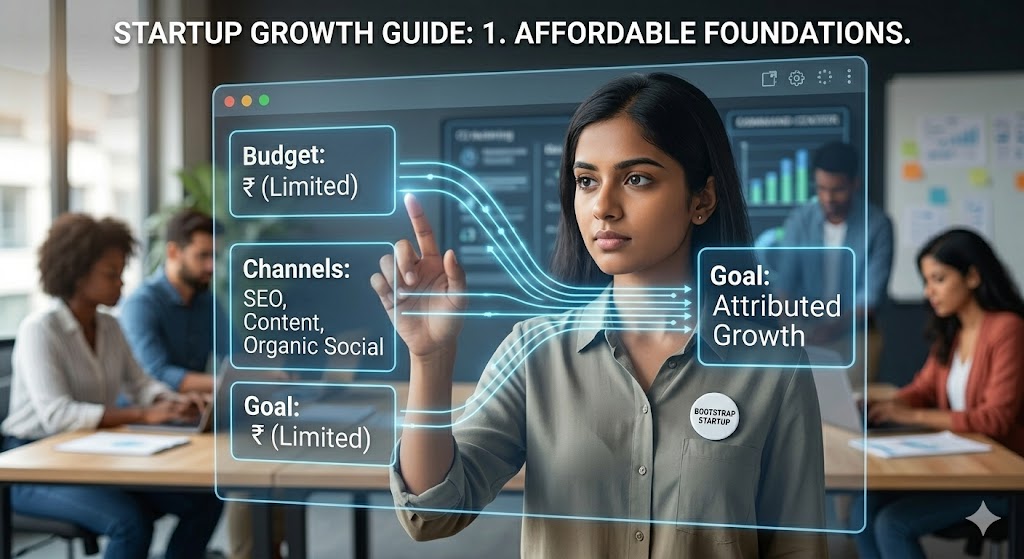
Affordable Performance Marketing Services for Startups: A Complete Growth Guide.

Affordable Performance Marketing Services for Startups: A Complete Growth Guide Affordable Performance Marketing Services for Startups – A Guide to Growing Successfully Building your own startup? That sounds awesome! You’ve got a fantastic idea, a killer product/service to launch, and a drive to succeed. There’s one thing, though. 🤔 How are you supposed to market your business with minimal investment? That’s where affordable performance marketing services come into play. Unlike traditional marketing, in which you throw some money hoping to get positive results in exchange, performance marketing ensures that every penny you pay goes straight to generating conversions, clicks, leads, or even sales. Below you’ll learn all about the best practices of performance marketing for startups and how to do it on a shoestring. 📌 What is Performance Marketing? Let’s begin with a simple explanation of the term itself. In essence, performance marketing is the ability to pay for a specific outcome only. The results you’re aiming at might include: A website click Lead generation Conversion An app download 👉 In short: You pay for the outcomes. As far as startups go, performance marketing can become a true game-changer. 🚀 Why Do Startups Require Affordable Performance Marketing? There’s a couple of reasons startups differ from big corporations. They require: Fast-growing Growth Safe options Maximize profits within constraints TV ads and billboards and other traditional advertising strategies are costly and challenging to measure. 🚀 How Does Performance Marketing Solve This Problem? By providing: ✅ Cost control You set how much to spend, and you can change anything at any time. ✅ Measurable ROI Track clicks, leads, and conversions. ✅ Quicker growth In contrast to SEO, paid ads yield instant results. ✅ Scalability Start small and scale what works. 💸 Why Is Performance Marketing Considered ‘Affordable’? Being affordable does not mean ‘inexpensive.’ Instead, it’s a term used to refer to cost-effectiveness. Here’s how performance marketing remains affordable for startups: 🎯 Point #1: Pay for results No money wasted on impressions with zero ROI. 📊 Point #2: Data-driven decisions Allocate more budget to successful campaigns while killing the rest. ⚙️ Point #3: Budget flexibility Begin with a minimum daily budget of ₹500-1000. 🔄 Point #4: Ongoing optimization Campaigns get improved over time, saving costs and maximizing profits. 📱 Best Affordably-priced Performance Marketing Channels for Startups Below, we will look at some marketing channels that generate results without burning a hole in your pocket. 🔍 Point #1: Search Ads (High Intention Traffic) Such advertising targets users actively searching for your offer. 👉 Ideal for: Service startups Local companies Lead generation 📱 2. Social media ads Instagram and Facebook enable you to communicate with a selected audience at a relatively affordable price. 👉 Suitable for: Brand promotion eCommerce Engagement 🛒 3. eCommerce ads Marketplaces and shopping advertising can directly generate purchases if you sell goods. 🎥 4. Video ads Short videos have become the main trend of today. 👉 Perfect for storytelling and demoing products. 💼 5. Retargeting campaigns These advertising efforts are aimed at users who have previously communicated with your brand. 👉 Higher conversion rate and relatively inexpensive. ⚙️ Key Services You Should Be Looking For If you’re thinking about hiring a specialized company or establishing an in-house team, make sure it includes: 🎯 Campaign strategy Campaign planning based on your objectives. 📊 Audience targeting Targeting the right audience is more valuable than a larger one. 🎨 Ad creative development Quality ad visuals and copy to persuade the target audience. 📈 Conversion tracking Accurate monitoring of performance. 🔄 Optimization & scaling Regular optimization of your campaigns. 📊 How to Reduce Your Performance Marketing Expenses It’s about strategy rather than finances. 💡 1. Start Small Perform test campaigns with low budget. 🎯 2. Be Specific Be niche-specific; do not target too broad audiences. 🧪 3. A/B Test Every Element Test: Ad creatives Headlines Target audience 👉 Helps to get fast results. 🔁 4. Leverage Retargeting Strategies Warm audiences always convert better and cost less. 📉 5. Optimize Your Landing Pages Best ads are worthless without optimized landing pages. ⚡ Typical Mistakes You Must Avoid Avoiding these mistakes may save you significant amounts of money: ❌ 1. Overpay at First Start testing with small investments. ❌ 2. Do Not Analyze Data analysis is mandatory for success. ❌ 3. Bad Quality Ads Poor quality ads result in poor conversions. ❌ 4. No Goal Setting Campaigns have no sense without a specific goal. ❌ 5. No Testing Testing is essential for efficient performance marketing. 📈 Practical Example Say the startup invested ₹15,000 into ads. Number of leads: 150 Cost per lead: ₹100 If even 10% of leads turn out to be customers and bring in ₹2,000 from them: 👉 Revenue: ₹30,000 👉 Profit: ₹15,000 👉 ROI: 100% This is the power of affordable performance marketing services for startups. 🔮 The Future of Performance Marketing for Startups The possibilities only get better from here! Startups can look forward to: AI-powered campaign optimizations Targeting the right audience Less cost per acquisition Automation solutions 👉 This means even startups have a chance against large enterprises. 🧠 Why You Need to Choose the Right Agency All marketing agencies are not created equal. A good one will: Have ROI as its primary goal Offer transparency with reports Optimize your campaigns continuously Be aligned with your business objectives 👉 Your choice will help you save valuable resources. 🏁 In Conclusion When you’re a startup, every penny counts. This is precisely why affordable performance marketing services are a must-have! With their help, you’ll be able to: Scale faster Spend smarter Scale confidently 👉 Just remember: It’s not what you spend but how efficiently you spend!

Digital marketing

Performance Marketing on Meta: A Complete Guide to Driving Real Results.

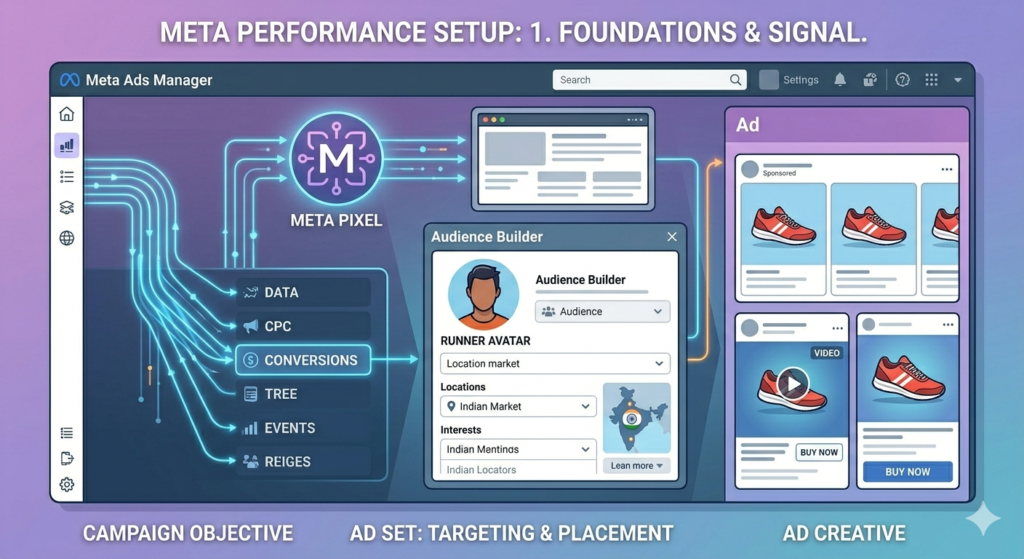
Everything You Need to Know About Performance Marketing on Meta Have you come across ads on Instagram and Facebook? Well, you’re doing your homework about performance marketing on Meta right now. But here’s the big question: 👉 Do the ads only attract attention…or deliver real results? Because with the current digital landscape, it’s never enough to attract likes. Businesses are seeking leads and sales—and performance marketing on Meta is the answer! So, what does it all mean? Let’s cut through the clutter and take a practical look at performance marketing on Meta. 📌 What is Performance Marketing on Meta? Performance marketing on Meta involves running campaigns on Facebook and Instagram that drive conversions rather than impressions. The types of performance include: Website clicks Lead form submission Sales App installations Video views 👉 Simply put, you are paid for every user interaction. 🚀 Why Meta is a Game Changer for Performance Marketing Meta, comprising Facebook and Instagram, is one of the most advanced platforms in the world. Let’s take a closer look: 🎯 1. Advanced Audience Targeting Meta enables you to reach users via their: Interests Behaviors Age & gender Location Purchasing habits 👉 This means you’ll connect with individuals who likely to make a conversion decision. 📱 2. Huge User Base in India Both Facebook and Instagram have huge user bases in India. 👉 Thus, you get access to a wide pool of potential clients regardless of which city they belong to. 🎨 3. Creative Freedom You can set up any type of ad: Image ads Video ads Carousel ads Reels ads Story ads 👉 This flexibility allows you to create unique advertising campaigns. 🔄 4. Great Retargeting Tools Ever visited a site and seen its banner everywhere after? This is retargeting, and Meta platforms do a good job at it. 👉 Retargeting users already familiar with your product boosts conversions. 📊 5. Real-Time Tracking & Optimization Meta provides you with insights regarding: Ad clicks Conversions Cost per result Audience performance 👉 Thus, you can optimize campaigns in real-time for higher ROI. ⚙️ How Performance Marketing with Meta Platforms Works Let’s break down the process in 5 easy steps: ✅ Step 1: Choosing the Campaign Objective You will be able to choose from the following options: Traffic Leads Sales Engagement Awareness 👉 Always select the one that fits your objectives. ✅ Step 2: Choosing the Audience You can: Target new audience Use custom audiences (your existing clients) Create lookalike audiences 👉 Lookalike audiences are great because they’ll be finding people that are similar to your existing customers. ✅ Step 3: Design High-Converting Ads It’s time for some creativity and strategy. Your ad must have: Effective hook (within first 3 seconds) Clear message Great visuals Call-To-Action (CTA) 👉 Sample CTAs include: “Shop now,” “Get a quote,” “Sign up.” ✅ Step 4: Decide on Your Budget and Bidding Strategy You can always start with low budgets and scale depending on your performance. 👉 Meta algorithm optimizes spending for you. ✅ Step 5: Monitor and Optimize Keep monitoring your performance and make changes: Turn off under-performing ads Scale high-performing ones Design and test new creatives 👉 Optimization is crucial for success. 📊 Important Metrics to Watch on Meta If your ads aren’t driving you these metrics, then something is wrong. 💸 Cost per result Cost of generating each lead or sale. 🖱️ Click Through Rate (CTR) How many people click on your ad. 👉 Higher CTR means more engagement. 🔄 Conversion rate Conversion of users after clicking. 💰 Return on Ad Spend (ROAS) Revenue divided by ad spending. 📉 Frequency How often people see your ad. Too high, on the other hand, leads to audience fatigue. 🚀 Best Strategies for Performance Marketing on Meta What actually works? Let’s check out. 🎯 1. Narrow Your Targeting Broad targeting is not always the best choice. 👉 More narrow targeting delivers better results. 🎨 2. Invest in Great Visuals & Ads A good ad creative can save your entire campaign. 👉 Use: Short videos Reels Real user testimonials 🔁 3. Run Retargeting Campaigns Retarget users who: Visited your website Added items to the cart Watched and engaged with your ads 👉 Such users are more likely to be interested. 🧪 4. A/B Test Your Ads Experiment with: Ad headlines Images Calls-to-action (CTAs) Targeting options 👉 Minor improvements in performance marketing can lead to substantial gains in return. 📱 5. Optimize for Mobile First The majority of users from India log in to Meta via mobile. 👉 Remember to: Optimize load times Ensure mobile responsiveness ⚡ Common Mistakes to Avoid Campaigns may flop due to simple mistakes. ❌ 1. Overly Broad Targeting It causes budget wastage. ❌ 2. No Analytics Tracking Not using metrics when creating a campaign leads to ineffective decisions. ❌ 3. Bad Ad Creative Poor-quality visuals drive engagement. ❌ 4. Not using Retargeting Not utilizing warm audiences. ❌ 5. Stopping the Campaigns Prematurely Some campaigns take time to optimize. 📈 Real Life Example Suppose you create a Meta advertisement campaign for your online store: Budget: ₹20,000 Sales generated: ₹80,000 👉 Impressive result. But suppose you optimize further by working on: Targeting options Advertising creatives Retargeting of the right audience 👉 Now, there are no limits to scaling. 🔮 Future of Performance Marketing on Meta Meta is continuously upgrading itself. Following trends will define the future of the platform: AI-based ad optimization Personalization in ads Video-first advertising (Reels dominating) Automation tools 👉 Early adopters will be highly advantageous. 🧠 Reasons Why Meta Advertising Is Necessary for Modern Businesses As we are living in a digital era where: Time spent on social media platforms is huge Decisions are based on contents on social media Attention is the main currency 👉 Meta converts attention to sales. 🏁 Conclusion Effective performance marketing on Meta is more than just placing ads; it involves making intelligent and data-based campaigns. It helps you generate consistent leads, increase sales, build brand awareness, and most importantly scale up the business. 👉 All

Digital marketing

How to measure ROI in performance marketing effectively.

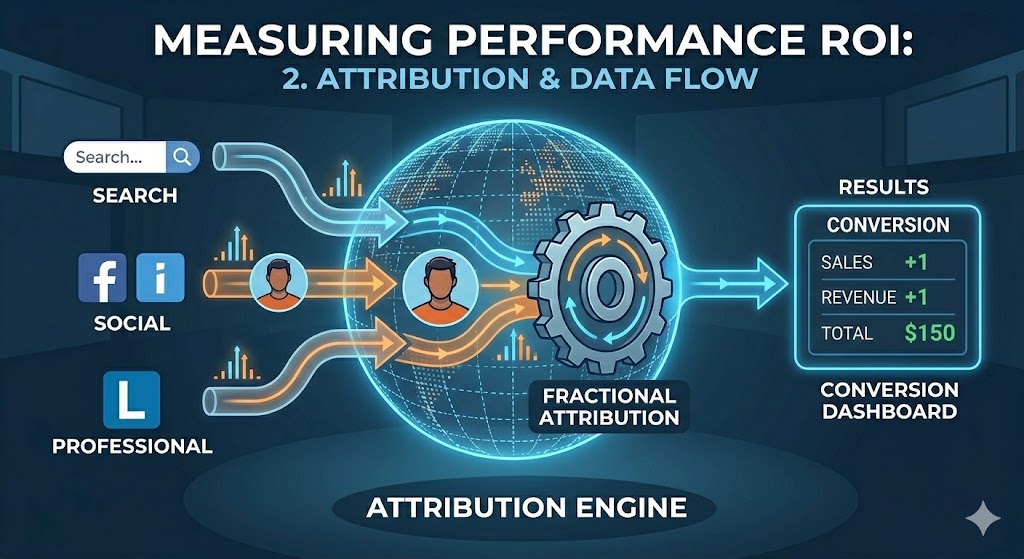
🏆 Successfully Measuring ROI in Performance Marketing If you’re running ads and not measuring ROI the right way you are essentially driving with your eyes shut. You may be spending money, receiving clicks, even producing leads—but here’s the million-dollar question: 👉 Are you truly profitable through your marketing? This is where ROI, or return on investment, is truly the key metric in performance marketing. Performance marketing in contrast to regular advertising allows you to measure everything. But just tracking it isn’t enough—you have to do it the right way. Let’s unpack it in a simple, practical matter where you can actually utilize the concepts to meet your business goals. 📌.describe ROI in Performance Marketing? Return on Investment (ROI) benefits you to determine how much profit or loss you’re making in relation with what you’ve spent. Return on Investment (ROI) helps you measure the success of your campaigns in performance marketing. Profitable Breaking even Losing money 👉 In simple terms: Calculating Return on Investment (ROI) = Profit from ads / Cost of the ads 📊 The Basic ROI Formula ROI = \frac{Revenue – Cost}{Cost} \times 100 This formula will give you your ROI in a percentage. 💡 Example: You spend ₹10,000 on ads You generate ₹30,000 in revenue ROI = 200% That means you earned double your investment. Why ROI is an Essential Element in Performance Marketing Honest talk— things like clicks, impressions, and traffic look promising… but they don’t cover your expenses.ROI is about focusing on the real game-changers: Profit Growth Sustainability 🚀 First of all, Tracking ROI Can Help:- You see which ads actually bring revenues – You don’t spend money on ads that don’t work- You make smarter decisions in your marketing – Your strategy will stand the test of time👉 The truth is, without ROI, you are just playing the guessing game. 📈 Top Metrics That Shouldn’t Be Overlooked With ROIOne thing to remember – ROI can’t do all the work by itself. To get a pretty good picture of it, you should track other metrics too. 💸 1. Cost Per Acquisition (CPA)Essentially, this one helps you understand how much it takes to get one customer. Formula: CPA = Total Ad Spend ÷ Conversions👉 The less CPA is, the more room for profits. 🖱️ 2. Cost Per Click (CPC)This will keep you informed about how much you give out for a single click. 👉 This one is crucial for knowing how much you spend on bringing visitors.🔄 3. Conversion Rate This counts how many people around go ahead and do what you want them to do.Formula: Conversion Rate = (Conversions ÷ Total Visitors) × 100 👉 The higher the conversion rate, the better your ROI will be.💰 4. Customer Lifetime Value (CLV) Most newbies just figure out CLV what it’s the first ordering value.CLV shows the total amount that a customer brings you over a long time. 👉 When your CLV is on the high side, you can spend more on ads.📊 5. Return on Ad Spend (ROAS) Many confuse ROAS with ROI.Formula: ROAS = Revenue ÷ Ad Spend 👉 It’s a measure of revenue, not profit.⚖️ ROI and ROAS Comparison (Major Difference) To put it as simply as possible:ROAS = The revenue that you earned ROI = The profit you actually earned 👉 Let’s say:You spend ₹10,000 → You get ₹20,000 ROAS = 2x But your profit might be less due to costs (goods labor etc.) 👉 That’s also the thing that ROI is more reliable in making business decisions. Step-by-Step: How to Measure ROI Effectively Let’s make this practical.✅ Step 1: Set Clear Goals The first thing you need to do before running a campaign is to set up the goal forthe campaign: Leads? Sales? App installs?👉 Without a goal figured out, ROI is a completely meaningless metric. ✅ Step 2: Track Conversions ProperlyTools that could help you: Google Analytics Facebook Pixel Conversion tracking tools👉 If your tracking method is wrong, the data you get for ROI will be off! ✅ Step 3: Calculate Total CostsMost people simply consider the amount of money spent on ads—however, this is a mistake.You should also include: Ad spend Agency fees Tools/software Creative costs👉 Genuine ROI is a measure of the whole investment, not just ads. ✅ Step 4: Measure Revenue AccuratelyKeep a record of each campaign’s revenue. 👉 If your business is eCommerce, this will be straightforward.👉 For service businesses, the lead-to-sale conversion method can be used. ✅ Step 5: Analyze and OptimizeAfter you have ROI data: Scale profitable campaigns Pause underperforming ones Test new strategies👉 That’s when the growth will occur.  🚀 Common Mistakes While Measuring ROITo get accurate results, you need to refrain from these:  ❌ 1.Ignoring Customer Lifetime ValueOnly focusing on one sale undervalues your ROI.  ❌ 2.Not Tracking ProperlyMissing data leads to making the wrong decisions.  ❌ 3.Looking at Short-Term Results OnlyCertain campaigns might only become profitable after some time.  ❌ 4.Focusing Only on Vanity MetricsLikes and clicks aren’t equal to profit.  ❌ 5.Not Accounting for All CostsHidden costs diminish the real ROI. 📊 Real-World ExampleYou’re doing an ad campaign for instance: Ad Spend: ₹20,000 Revenue Generated: ₹60,000 Other Costs: ₹10,000ROI Calculation: Profit = ₹60,000 – ₹30,000 = ₹30,000ROI = 100% 👉 You actually doubled your investment with this. Advanced ROI Strategies (For Better Results)Once you get the fundamentals, you can increase your performance with these last techniques:🔁 1. A/B TestingTry different advertising formats, images, and target groups.👉 Even small changes could result in a significant boost of your ROI.🎯 2. Audience SegmentationInstead of targeting everyone, focus on very specific individuals.👉 More targeted audience = more conversions.🤖 3. Use AutomationThe platforms you use to advertise probably support optimization based on AI.👉 Why not base your decisions on the data.🔄 4. Retargeting CampaignsReach out to people who have already made contact with your brand.👉 These are potential customers who yield higher conversion rates.📉 5. Funnel OptimizationBe sure to optimize:Ad → Landing Page → Conversion👉 Even small tweaks can drive up the ROI.⚡ Why ROI

Digital marketing

Top platforms for running pay-per-click campaigns in India?

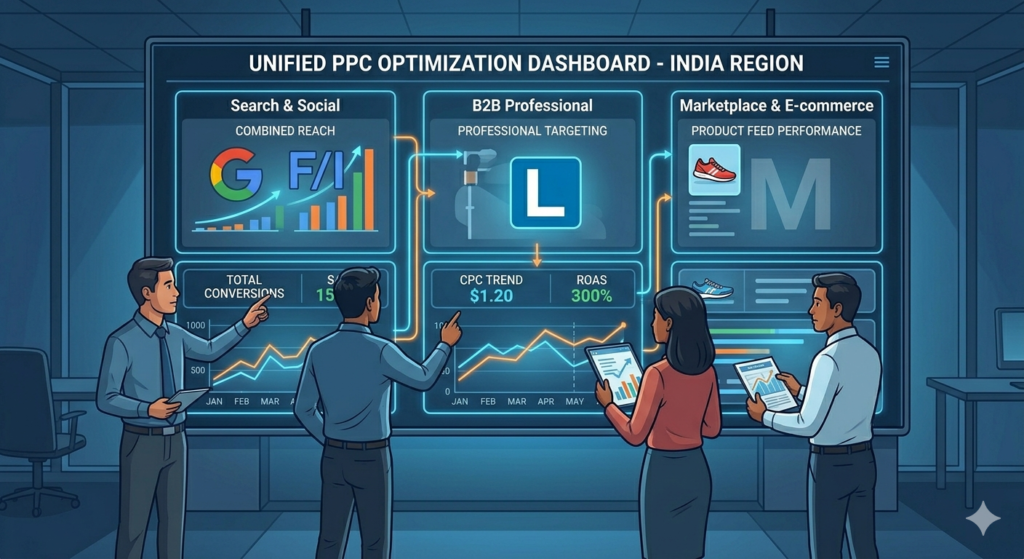
Top platforms for running pay-per-click campaigns in India? One of the more intriguing items in the room was the model barn constructed to house the horses from the Connecticut State Horse Show. It was built for the AG from cardboard by Robert, a civil engineering student from UMASS seeking the time to make such a barn was not obtainable so Matt and David cut it out on the CNC.  >Leading Indian Platforms for Execute Pay-Per-Click Campaigns If you’re going to run paid ads in India, there’s always one common question: What PCC platform is the best? And yeah, I think it’s a big concern. > because selecting the wrong platform can flush your budget. Whereas selecting the right can lead to leads, sales & overall business prosperity In India’s rapidly expanding digital space, PPC advertising ranks among the top techniques in audience engagement. Today, Google and Meta constitute the most powerful PPC pipeline that directs the bulk of marketers’ efforts, given their implemented strategies. But there isn’t a one answer for everyone. Understand the 4 best PPC platforms in India, their functionality and the right choice for your business. The room feels stuffy. It’s too warm. Notice that the sensation of hotness predominates over the sensation of coldness which describes the temperature. >A Summary Overview of PPC Advertising Before diving into various platforms,as we know the simplest is always the best. PPC (Pay-Per-Click): In this type of Advertising model you are just charged when your ad gets clicked. Rather than waiting for your organic channels to grow for months, here is what PPC can do: * Gain immediate visibility * Attract focused traffic * Build pipeline quickly *Monitor all expenditure day by day. 3 Proven legal interventions have been ineffective- 01. According to the Court’s assessment to conclude that additional legal measures would not help. #Best PPC channels in India So let’s take a look at the platforms which actually work in India. To explain the entire AI, 7 objects have been selected to have a best guess at the identifications of the grand, and the possible origination of the objectives. By contrasting the objects entire general features and traits against one another you can make a hypothesis may identified them. Welcome to Google Ads! Google’s paid search program is best known by many as simply the easiest, most effective way to advertise online. If you only want to use one platform, this is the one to go for. 2. Google Ads- Google is the most popular PPC platform in India, as people search actively on Google when they are looking for something([Mantra IT Solutions][2]) > Why is Google Ads so effective: – in terms of targeted and aggressive; the proven track record of. – Business is already searching on Google than filling the gaps; this it has never been easier to get in front of potential customers than now. – Focuses on the most profitable users-those who are already searching either on Google or on the web in general. * Great impressions in search, display & YouTube * Suit able for, almost every industry Best For: – Fraternity members Perfectionist who are perfectionists and about details (e.g. Not looking at a fellow student during a conversation) Sorry. This group made no sense in English. * Generation of qualified leads * Local commerce: * Service oriented=service based companies even products also should be considered as a service/products * Successful conversion campaigns As an illustration: You’ll be in front of the user when they need you most. If he is searching for “best digital marketing agency”, your ad will be there. Methodology: In the methodology, I laid out my research. I reported here on my research question, the components I aimed to study, and my own hypothesis. Methodology also included a list of my research sites. # 2. Meta ADS (facebook & instagram):04/22. 312 MetADS24/7 is a dedicated advertising campaign run by Meta Ads. This campaign aim to provide warm leads to AFRO best deals24/7 using Facebook and Instagram. When demand is taken by Google, Meta Ads creates demand. In India people are addicted to Facebook and Instagram, so where better to showcase one’s company. Therefore giving a great platform to promote and engage one’s followers.[2] 6 reasons why the effectiveness of meta ads is explanation; * Targeting in depth (interests/behavior/demographics) * Talking with your visuals images, reels, videos etc: * Advanced retargeting 功能强大的再导追踪能力 Best For: * Brand awareness * eCommerce sales * Lead generation campaign I moli9b 3rrf 9tsa9 3lihah Audience building Ideal for organizations seeking to attract clients, not just capture them. Above is an expression which we came up with for knowing all of the positive factors of a number. Since finding the sum of all its factors is just the sum of combining all its factors, we need an extension for combining the positive factors of a number which covers all combinations. We decided that we could use the following to generate all of those factors from the positive factors of a number. (This function is obviously designed to generate the positive factors of a number, including b=+). #3. Amazon Ads-optimal for eCommerce If you are an online seller, especially in Amazon, then this place is the best. Indian eCommerce business is booming, so, Amazon Ads helps you put your product where people are set to buy already ([Digital Marketing Institute Bangalore][3]) Like this: “If you have a successful product or service, it makes sense to spend a lot of dollars making people aware of it-especially if that product or service is available on the world’s biggest online store.” Targeting users who are more likely to purchase. ,enhances in terms of visibility of the product, Brand image, Its visibility in the marketincrease in advertising and its visibility in the market. No off-set effects : The impact on profitability is purely made up of the increased conversions directly. Best For: * Product businesses: they are contacted directly and are looking for our offering. Some of them are

Digital marketing

What is Performance Marketing – How does it different from Traditional Advertising?

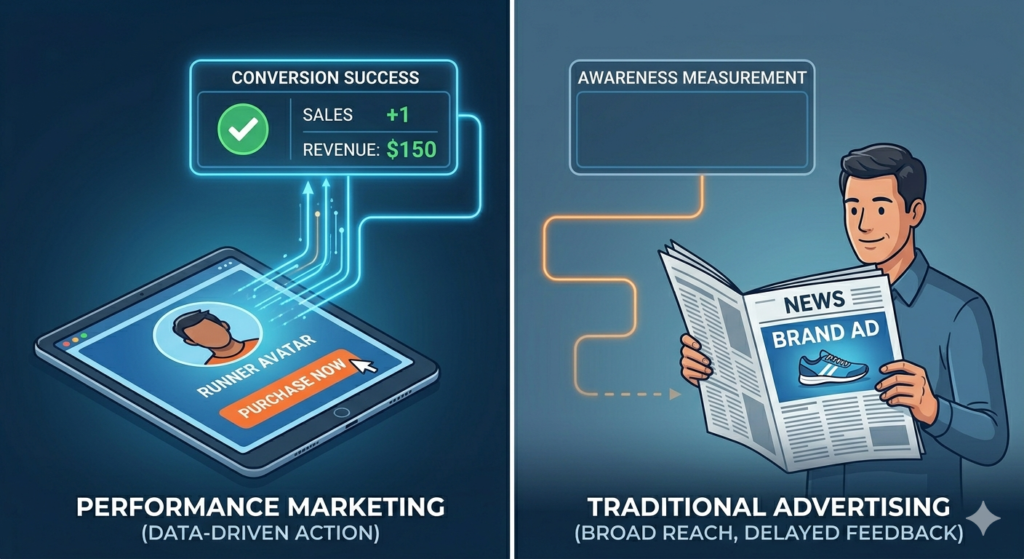
What is performance marketing and how does it differ from traditional advertising? What is Performance Marketing and How Does It Differ from Traditional Advertising? Companies in today’s digital world are finding the need not only to be seen, but to get things done! That is why the power of performance marketing comes in, a strategy that is centred on results.However, what is the mechanism of this, and in what ways is it different from traditional advertising? Here is a simple way of visualising:- What is Performance Marketing?  Performance marketing is a segment of digital marketing where companies pay only when a targeted action takes place. This action could be: * Clicking * Creating a lead * Making a purchase * Downloading an app* Filling a form In other words, it’s result-based payment and not only exposure. Whereas in traditional marketing, it is like throwing money upfront and then praying that the campaign will work, performance marketing has the virtue that every single cent spent is backed by the significant metric. Main Channels in Performance Marketing Performance marketing is possible on a number of digital channels.Below are some of the most notable ones:                    1.Search Engine Marketing (SEM) Paying for advertisements that pop-up on the search engines likeGoogle, intended for the users who are actively looking for the products or services in question is what this is about.  2.Social Media Advertising By means of ads tailored to the tiniest details that the users put into their profiles and also based on their past behavior and interests, businesses can run ads that will highly likely convert among the audience on Instagram, Facebook, and LinkedIn.  3.Affiliate Marketing Here the third-party marketers push your products.They get paid only when their promotion efforts lead to a successful sale or a lead.  4.Native Advertising Such advertisements are made to match the content of the platform very closely.They look like a sponsored article or a recommendation.  5.Display Advertising The idea is to leverage banner ads placed on different websites in order to get the message across and to motivate people to act. How does Performance Marketing Operate? This is a simple concise and, at the same time, very efficient model that performance marketing follows: Set a Goal – Determine the precise action that you want your audience to perform (e.g. make a purchase, become a lead, click your ad, etc.) Launch Campaigns – Advertise your products or services on various online platforms.  Track Performance – Keep an eye on the progress of your marketing campaigns by using analytics software.  Optimize Continuously – Keep on enhancing your marketing campaigns based on the information that you gather.  Pay for Results – You make payment only when the target action is done. This secures that you gain maximum efficiency and a high return on investment (ROI).  Traditional advertising – refers to the conventional offline marketing methods that have been used for many years.  Examples of these are: It is common practice in traditional advertising that companies pay for being seen and reachable rather than paying for performance of measurable outcomes.  Let’s draw a comparison between the two techniques so that we can better understand their fundamental differences.  Performance Marketing: You make a payment only when a particular action is done (e.g. CPC CPA, CPL).  Traditional Advertising: You buy advertising time or space upfront with no regard to whether any action is taken or not.  Examples:  Performance Marketing: All components can be measured – the clicks conversions ROI engagement etc.  Traditional Advertising: One hardly knows which one exactly produce results or to what extent. This is by far one of the biggest benefits of performance marketing.  Performance Marketing: Enables targeting of people with a high degree of accuracy on: Traditional Advertising: Is targeted at a wide range of general audience. Performance marketing makes sure your ads reach the right audience, not just a lot of people.  Flexibility and Optimization Performance Marketing: Campaigns can be changed at the moment.  Traditional Advertising: Once a campaign has been launched, making changes is both hard and costly. Digital campaigns can be improved on the fly. Cost Efficiency Performance Marketing: You only spend money on the results you get, so your budget is used effectively.  Traditional Advertising: You have to put a lot of money upfront with no guarantee of the returns. This is perfect for startups and small businesses that have limited budgets. Speed of Results Performance Marketing: Real-time tracking allows you to see the outcomes quickly.  Traditional Advertising: Impact of these campaigns are seen after a longer time.  Why Performance Marketing is Dominating in 2026 The shift to performance marketing isn’t random it’s simply the advantages that it offers, namely: -Data-Driven Decisions Marketers are employing real-time data to make their campaign changes more effective. Better ROI Each campaign is fine-tuned to maximize tangible outcomes. Scalability Winning campaigns are capable of being quickly scaled up.  Personalization Ads can be customized to the preferences of a single user. Transparency You know exactly where and how your money is being spent.  Limitations of Traditional Advertising – Traditional advertising hasn’t died yet, especially as a tool for branding, but it comes with a good number of cons:  *No way to precisely track performance.  *Very expensive. *Narrow targeting options for audience. *Feedback is slow. *Less engagement than digital platforms.  When Should You Use Performance Marketing? Opt for performance marketing if your main goals are: *Lead generation. *Boosting online sales. *Getting more traffic to your site.  *Expanding your business rapidly. *Getting the most out of your investment. Most Suitable For: – Startups. – eCommerce businesses. – Service-based companies. – Digital-first brands.Advantages of Traditional Advertising: The traditional way of advertising will not disappear, it is especially effective in: – Creating Brand Recognition. – Targeting Offline or Remote Area Audience. – Executing Large-Scale Advertisement Campaigns. – Building Strong Emotional Bond with a Brand. For example: Big brand companies even now air TV ads to reach a large number of people.Performance Marketing and Traditional Advertising: Which One Should You Choose? It is your

Scroll to Top